
Private jet membership programs give frequent flyers a faster route to guaranteed lift than one-off charter, but the right structure depends on how often you fly, where you fly, and whether you want to own a share of an aircraft or simply lock in a rate. This guide ranks the programs that matter most in 2026 and shows where each one wins and where it falls short.
- NetJets wins overall for global fractional ownership and the broadest fleet access in 2026.
- Sentient Jet's jet card model suits flyers who want guaranteed rates without an ownership stake.
- Wheels Up is the lowest-commitment entry point for US domestic flyers.
- Airshare fits regional US travel; it is not built for long-haul international routes.
- A broker like Private Flights compares programs across operators before you sign a multi-year contract.
Why this matters
A membership contract is a multi-year financial commitment, not a single flight booking, and switching providers mid-term is expensive. Getting the structure wrong in year one of a fractional deal or jet card can mean paying for hours you never use, or discovering blackout dates on the exact days you need to fly.
Most buyers compare two or three named programs and stop there, missing options that would actually fit their flying pattern better. Private Flights works across multiple operators as a charter broker, which means the comparison in this guide reflects how these programs actually perform against each other rather than how each one markets itself.
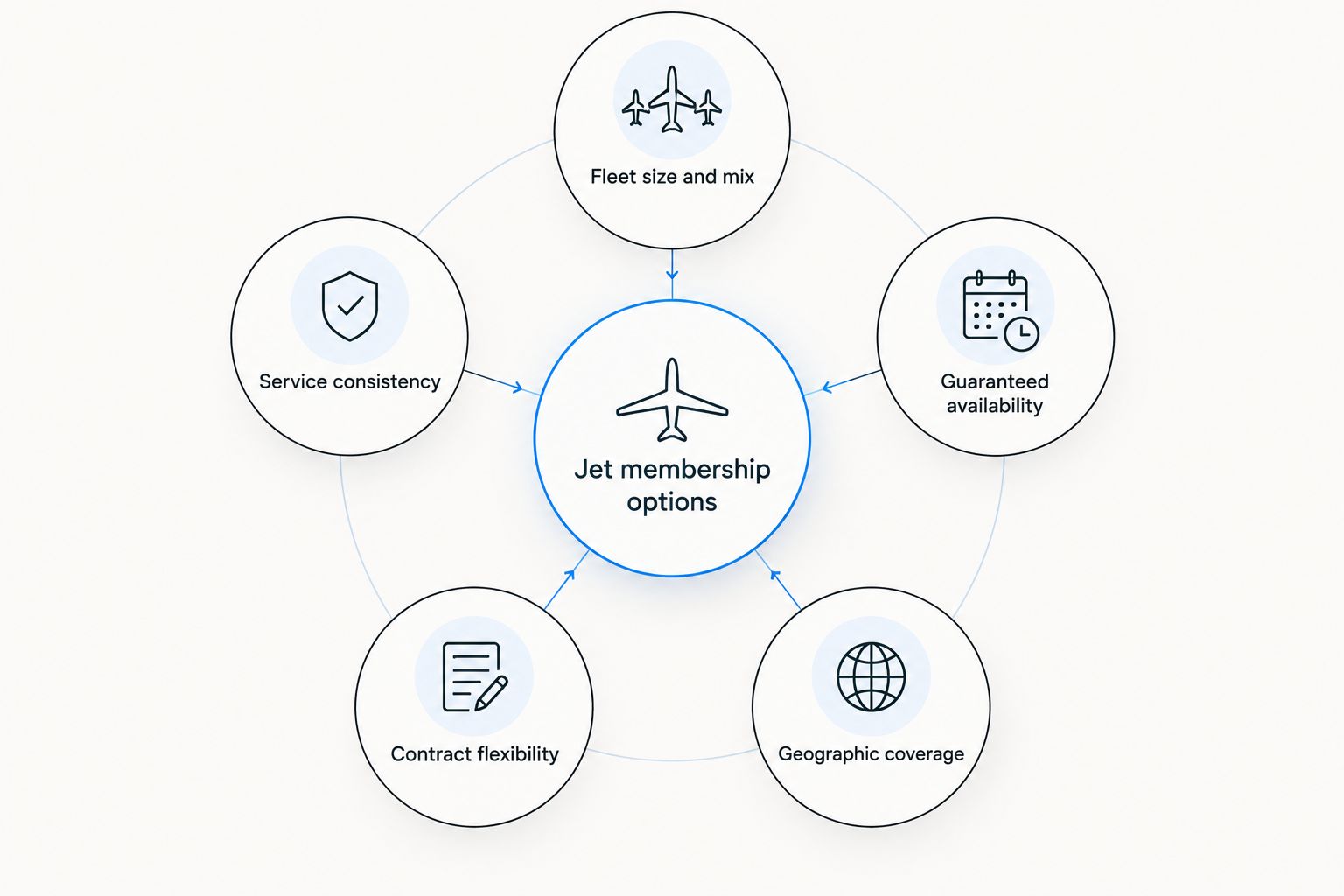
What makes the best private jet membership program in 2026
- Fleet size and aircraft mix — enough categories (light, midsize, heavy) to match different trip types
- Guaranteed availability on peak days — how the program handles Thanksgiving, Christmas, and major sporting weekends
- Geographic coverage — domestic-only versus true global reach
- Contract flexibility — fractional share, jet card, or subscription-style membership
- Operator safety standards — ARGUS-rated or Wyvern-registered operator networks
- Service consistency — same crew, same cabin standard, trip after trip
Private jet membership programs at a glance
| Program | Best for | Standout feature | Key limitation |
|---|---|---|---|
| NetJets | Global fractional ownership | Largest fractional fleet and route network | Multi-year commitment, built for high annual hours |
| Flexjet | Ultra-luxury fractional cabins | Consistent Red Label crew and heavy-cabin comfort | Fewer light-jet options, concentrated in North America and Europe |
| Sentient Jet | Guaranteed-rate jet card access | Locked hourly rate without an ownership stake | Hours expire within the contract term |
| Wheels Up | Domestic US on-demand membership | Lower entry point than fractional ownership | Limited international routing |
| Airshare | Regional US dedicated aircraft | Dedicated aircraft assigned to your membership tier | Fleet concentrated in the central US |
1. NetJets: best private jet membership for global frequent flyers
NetJets, founded in 1964, pioneered the fractional ownership model and still operates the largest fractional fleet flying today. Owners buy a share of an aircraft and draw down guaranteed flight hours across a global route network rather than a single regional footprint.
NetJets pros:
- Widest fleet mix, from light jets to long-range heavy jets
- Genuine global reach, not just US domestic coverage
- Strong peak-day availability compared with jet card programs
NetJets cons:
- Highest financial commitment on this list, typically a multi-year term
- Built for flyers logging significant annual hours, not occasional travel
- Exiting a fractional share early can be costly
Best for: owners flying 50+ hours a year across multiple continents. Verdict: Buy if your flying volume justifies fractional ownership.
2. Flexjet: best private jet membership for ultra-luxury fractional cabins
Flexjet, founded in 1995, runs a fractional program built around Gulfstream and Bombardier heavy-cabin aircraft and its Red Label service tier, which assigns dedicated crews to owners rather than rotating crews across the fleet.
Flexjet pros:
- Newer average fleet age than most competitors
- Consistent crew assignment improves service familiarity
- Strong cabin comfort on heavy and super-midsize aircraft
Flexjet cons:
- Thinner light-jet selection than NetJets
- Coverage concentrated in North America and Europe
- Contract terms carry the same multi-year commitment as NetJets
Best for: frequent flyers who prioritize cabin comfort and crew consistency over route breadth. Verdict: Buy for luxury-first buyers, Skip if light-jet access matters more.
3. Sentient Jet: best private jet membership for guaranteed-rate access without ownership
Sentient Jet sells jet card memberships: you prepay a block of flight hours at a locked hourly rate, with no fractional ownership stake. Jet cards in this category are typically sold in blocks of 25 flight hours, which keeps the entry commitment well below a fractional share.
Sentient Jet pros:
- Lower entry commitment than fractional ownership
- Locked rate protects against mid-contract price swings
- Flexible aircraft category choice per trip
Sentient Jet cons:
- Hours expire within the contract term if unused
- Blackout-date restrictions can apply on the busiest travel days
- Service consistency depends on which third-party operator flies your trip
Best for: flyers who want predictable pricing without a multi-year ownership commitment. Verdict: Buy for occasional-to-moderate flyers.
4. Wheels Up: best private jet membership for domestic US on-demand travel
Wheels Up runs a subscription-style membership with on-demand booking across a managed fleet plus a broader charter marketplace, aimed squarely at US domestic travel rather than global routing.
Wheels Up pros:
- Lower entry point than fractional ownership programs
- Membership plus marketplace gives more booking flexibility
- Strong footprint across regional US airports
Wheels Up cons:
- Aircraft mix skews toward light and midsize cabins
- International routing is far more limited than NetJets or Flexjet
- Marketplace bookings introduce variability in service standard
Best for: members who fly primarily within the continental US. Verdict: Hold for domestic-only flyers, Skip if transatlantic routes are a regular need.
5. Airshare: best private jet membership for regional US dedicated aircraft
Airshare pairs a fractional-style membership with dedicated aircraft assigned to your tier, concentrated in the central and midwest United States rather than a national or global network.
Airshare pros:
- Dedicated aircraft rather than a shared pool
- Strong presence in regional markets underserved by national programs
- Consistent crew on assigned aircraft
Airshare cons:
- Smaller overall fleet than national competitors
- Coverage gaps outside the central US
- Limited heavy-jet options for long-haul trips
Best for: regional US flyers who value a dedicated aircraft over national reach. Verdict: Buy for central-US routes, Skip for global travel.
How we ranked these programs
Each program was measured against the same five criteria set out above: fleet mix, peak-day availability, geographic coverage, contract flexibility, and service consistency. No program wins on every criterion, which is why the ranking splits by use case instead of naming one universal winner.
How a broker fits into your membership decision
A jet card or fractional contract locks you into one operator's fleet and route map for years. Private Flights arranges charter and membership access across an ARGUS-rated operator network, which means the comparison happens before you sign, not after you discover a coverage gap on a route you fly regularly.
That matters most for buyers weighing two or three programs above who are not sure which one matches their actual flying pattern in 2026, versus the pattern they expect to have.
Compare membership options before you commit
Get an independent read on which program fits your route map.
Which private jet membership program should you choose in 2026?
If you fly 50 or more hours a year across multiple continents, NetJets remains the default choice for 2026: its fleet breadth and route network cover more scenarios than any other program on this list. If cabin comfort and crew consistency matter more than route breadth, Flexjet is the stronger pick.
Flyers who want guaranteed pricing without a multi-year ownership stake should start with Sentient Jet's jet card, and anyone whose flying is US-domestic and occasional will get more value from Wheels Up than from a fractional share they will not fully use. Undecided buyers should compare against their last 12 months of actual trips, not their travel aspirations, before signing anything.
FAQ
What is the best private jet membership program in 2026?
NetJets is the strongest overall pick in 2026 for flyers logging 50+ hours a year across multiple continents, due to its fleet size and global route network. Flyers with lighter or domestic-only patterns are better served by Sentient Jet or Wheels Up.
Is a jet card better than fractional ownership?
A jet card suits occasional flyers who want a locked hourly rate without a multi-year ownership commitment, while fractional ownership suits flyers logging enough annual hours to justify owning a share. The right choice depends on your actual flight volume, not your preference on paper.
How much flight time does a typical jet card include?
Jet cards in this category are commonly sold in blocks of 25 flight hours. Hours are usually valid for a fixed contract term and can expire if unused.
Is Wheels Up good for international travel?
Wheels Up is built primarily for US domestic travel and has far more limited international routing than NetJets or Flexjet. Members flying internationally on a regular basis should look at a fractional program with global reach instead.
Do private jet membership programs guarantee availability on peak days?
Guaranteed availability varies by program and contract tier, with fractional programs generally offering stronger peak-day guarantees than jet cards. Blackout-date restrictions are common on jet cards during major holidays.
Can a broker help me choose between membership programs?
Yes. A broker with access across multiple operators can compare fleet, route coverage, and contract terms against your actual flying pattern before you commit to a single program.
What does ARGUS rating mean for a private jet operator?
ARGUS is an independent aviation safety auditing body that rates charter operators on safety management and operational history. Booking through ARGUS-rated operators is a standard due-diligence step in 2026.
Is fractional ownership worth it for occasional flyers?
Fractional ownership is generally not worth it below roughly 50 hours of annual flying, since the ownership stake and multi-year commitment cost more than the hours are worth. A jet card or on-demand charter is usually the better fit at lower flight volumes.
One last thing
Most members of a fractional program or jet card still hit gaps their contract does not cover, whether that is a route outside the network, a peak day with no availability, or a trip that does not justify drawing down a full block of hours. That is the exact gap a charter broker fills, and it is worth checking before 2026 contract renewals lock in another year of terms you have not stress-tested against your real travel pattern.